 Onyxprotocol
 XCN staking
Updated -
Onyx liquid staking accepts native XCN on Onyx Mainnet and returns stXCN, which represents the staked position. Holders can transfer stXCN while the position earns variable rewards, subject to the protocol owner’s contract controls.
Page sections
- Network and staking asset
- Native XCN on Onyx Mainnet, with a wallet connected to that network. Ethereum ERC-20 XCN is a separate representation.
- Liquid staking token
- stXCN represents the staked position. Holders can keep, transfer, or use it while that position earns rewards.
- Reward rate
- Variable; check the APR displayed in the Onyx App before staking. Returns are not guaranteed.
Match the XCN balance to its intended use
The Onyx Bridge supports moving XCN between its Ethereum ERC-20 representation and its native Onyx representation. This cross-chain movement prepares the asset for a different network; liquid staking on Onyx Mainnet takes native XCN.
Native XCN also pays network gas and supports native transfers on Onyx Mainnet. Keeping XCN available suits those tasks, while stXCN represents a position committed to liquid staking. The Onyx App’s position view shows a connected wallet’s stXCN balance, underlying XCN value, earned rewards, and current APR. Its history lists staking and unstaking transactions.
Who controls the staking conditions
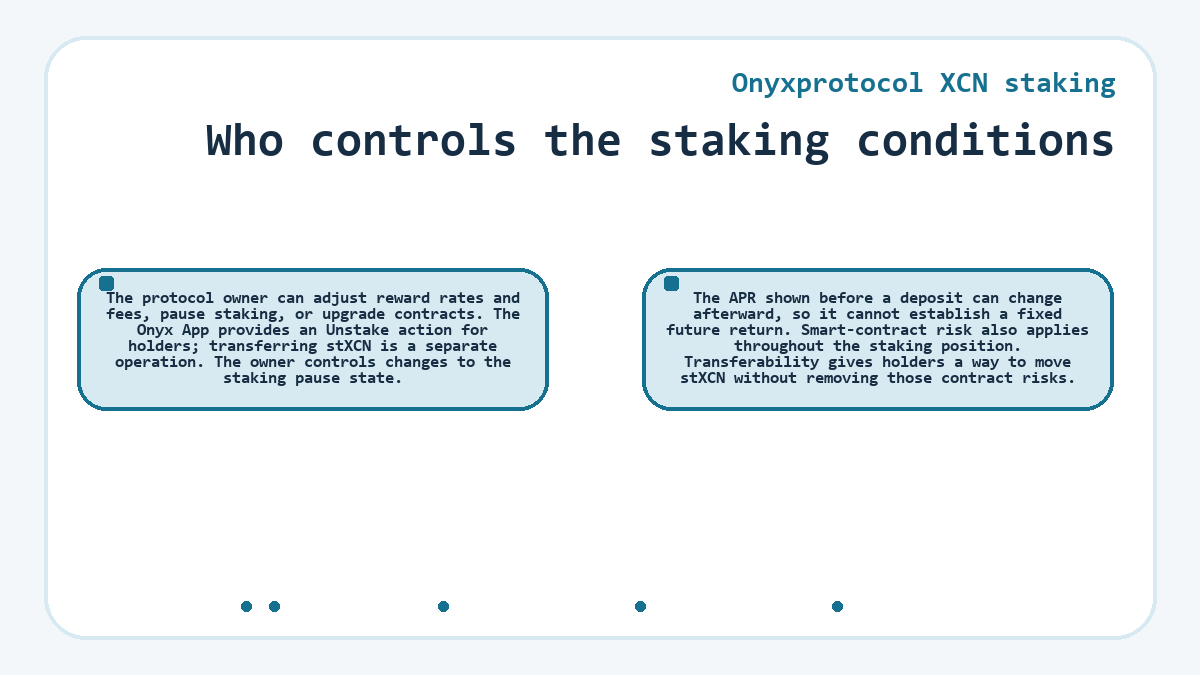
The protocol owner can adjust reward rates and fees, pause staking, or upgrade contracts. The Onyx App provides an Unstake action for holders; transferring stXCN is a separate operation. The owner controls changes to the staking pause state.
The APR shown before a deposit can change afterward, so it cannot establish a fixed future return. Smart-contract risk also applies throughout the staking position. Transferability gives holders a way to move stXCN without removing those contract risks.
Governance follows the deployed system’s rules
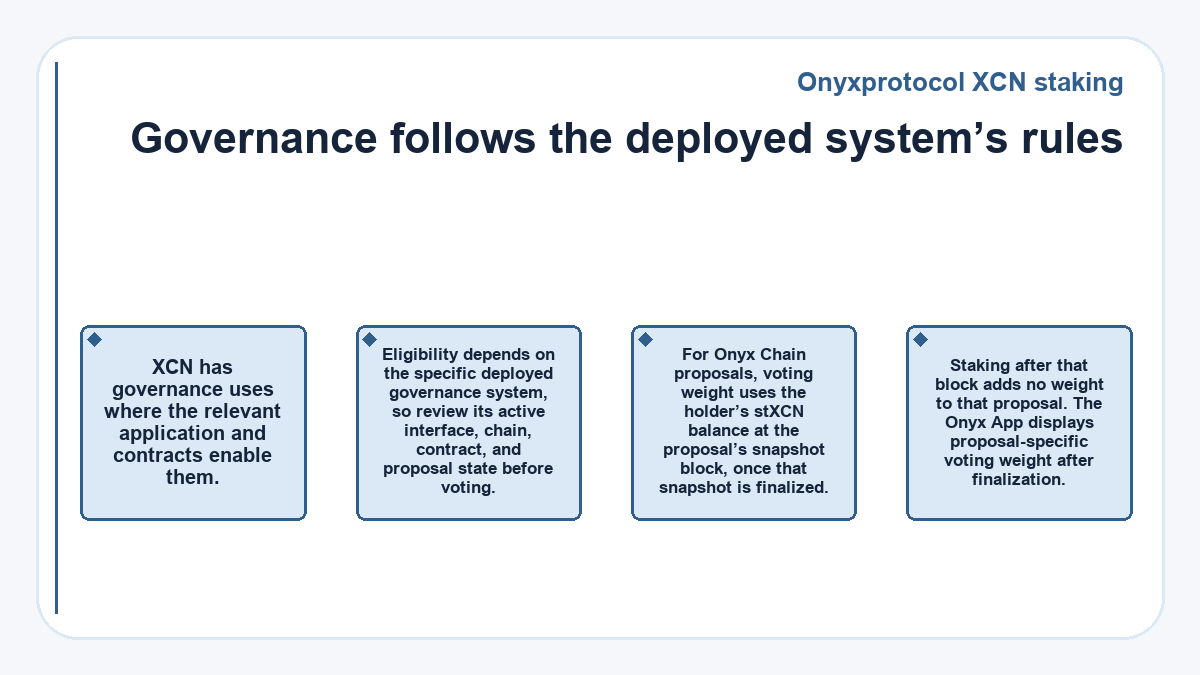
XCN has governance uses where the relevant application and contracts enable them. Eligibility depends on the specific deployed governance system, so review its active interface, chain, contract, and proposal state before voting. For Onyx Chain proposals, voting weight uses the holder’s stXCN balance at the proposal’s snapshot block, once that snapshot is finalized. Staking after that block adds no weight to that proposal. The Onyx App displays proposal-specific voting weight after finalization.
Before choosing XCN liquid staking
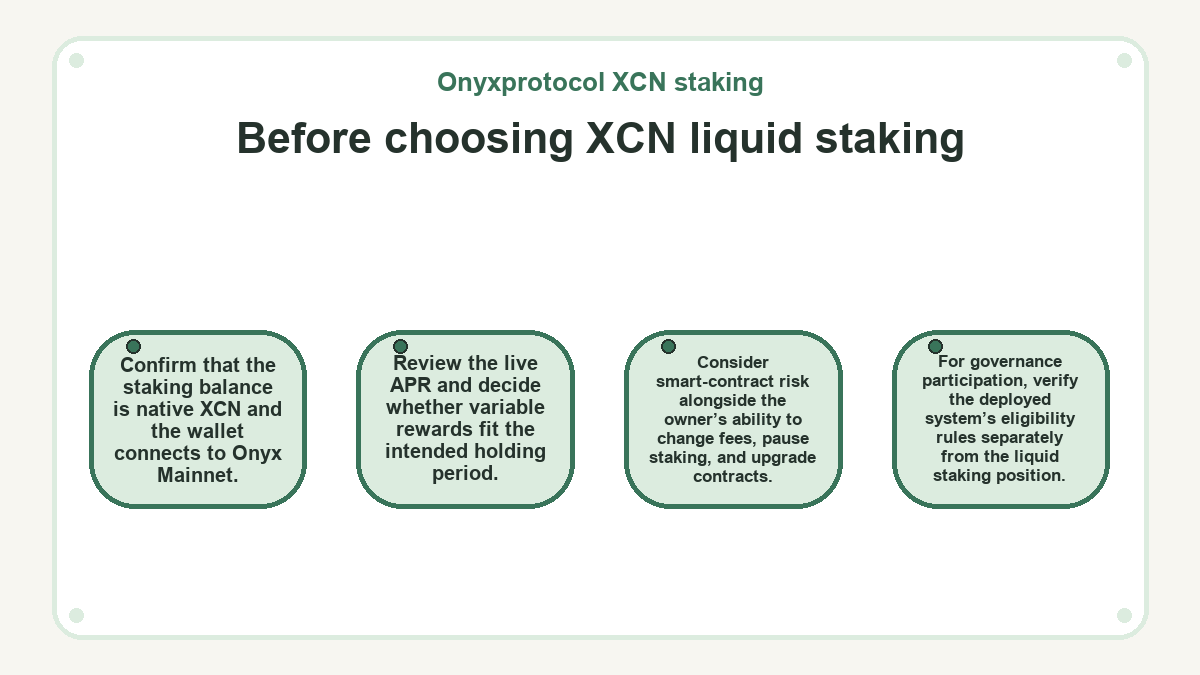
- Confirm that the staking balance is native XCN and the wallet connects to Onyx Mainnet.
- Review the live APR and decide whether variable rewards fit the intended holding period.
- Consider smart-contract risk alongside the owner’s ability to change fees, pause staking, and upgrade contracts.
- For governance participation, verify the deployed system’s eligibility rules separately from the liquid staking position.