 Onyxprotocol
: settlement without Ethereum
Updated -
Onyx Mainnet is an EVM-compatible Layer 1 that uses its own consensus to order and settle transactions. Ethereum does not provide its settlement, even when applications use familiar Ethereum development tools.
Article sections
- Network model
- Independent Layer 1; Onyx is neither a rollup nor a Layer 3.
- Consensus
- Asynchronous Byzantine fault tolerant (aBFT) consensus on Onyx Mainnet.
- Ethereum compatibility
- Ethereum addresses, Solidity contracts, signed EVM transactions, and JSON-RPC methods.
- Native gas asset
- XCN on Onyx Mainnet.
How applications reach the Onyx ledger
Onyx’s public data path starts with consensus validators, followed by signed record streams and regional mirror services. REST/gRPC data services and EVM JSON-RPC relays then supply data to wallets, explorers, applications, and indexers.
Where Ethereum remains relevant
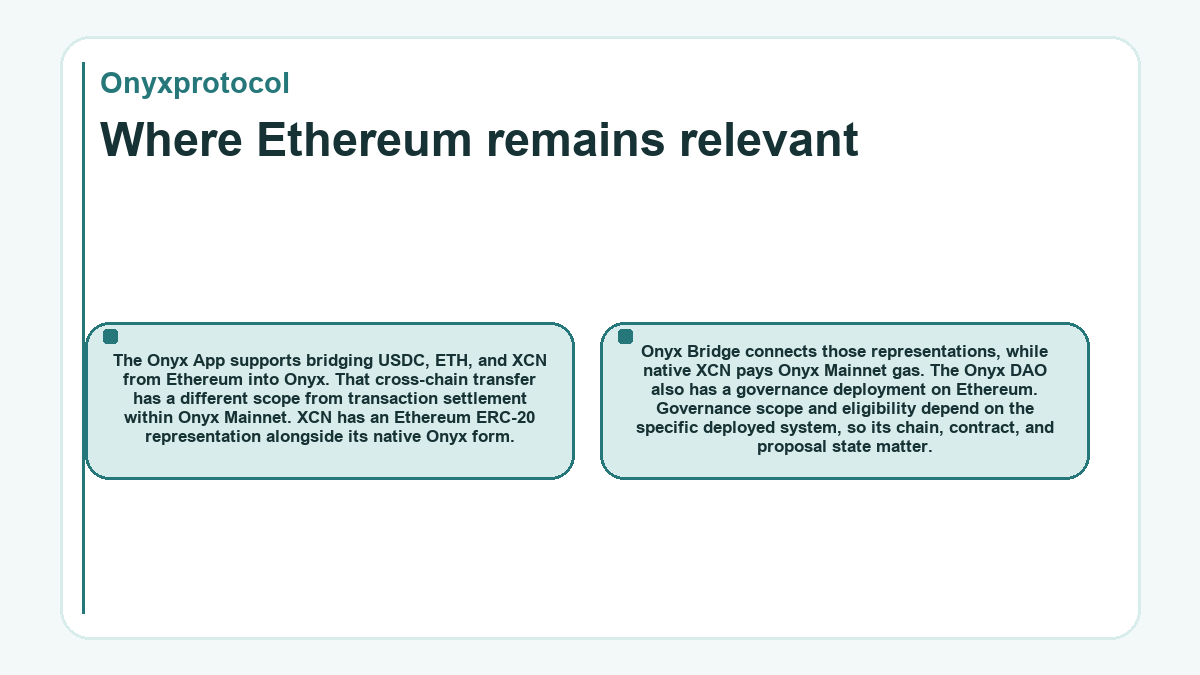
The Onyx App supports bridging USDC, ETH, and XCN from Ethereum into Onyx. That cross-chain transfer has a different scope from transaction settlement within Onyx Mainnet.
XCN has an Ethereum ERC-20 representation alongside its native Onyx form. Onyx Bridge connects those representations, while native XCN pays Onyx Mainnet gas.
The Onyx DAO also has a governance deployment on Ethereum. Governance scope and eligibility depend on the specific deployed system, so its chain, contract, and proposal state matter.
Why older lending material describes Ethereum
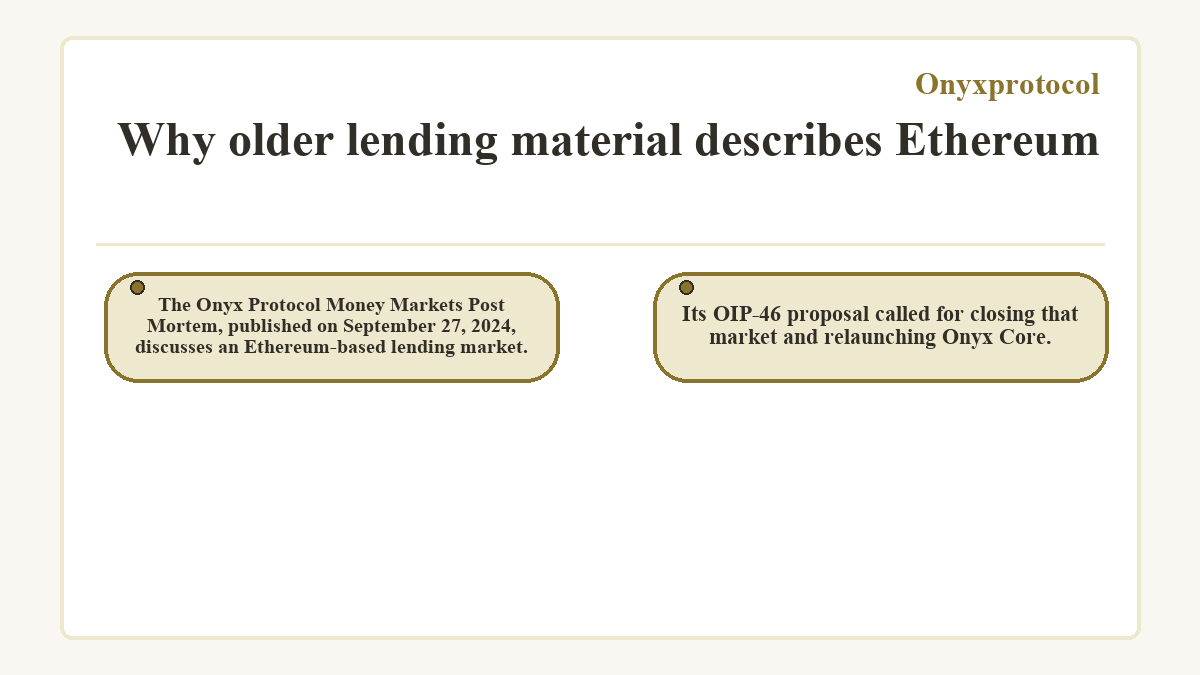
The Onyx Protocol Money Markets Post Mortem , published on September 27, 2024, discusses an Ethereum-based lending market. Its OIP-46 proposal called for closing that market and relaunching Onyx Core.
Check which network dependency applies
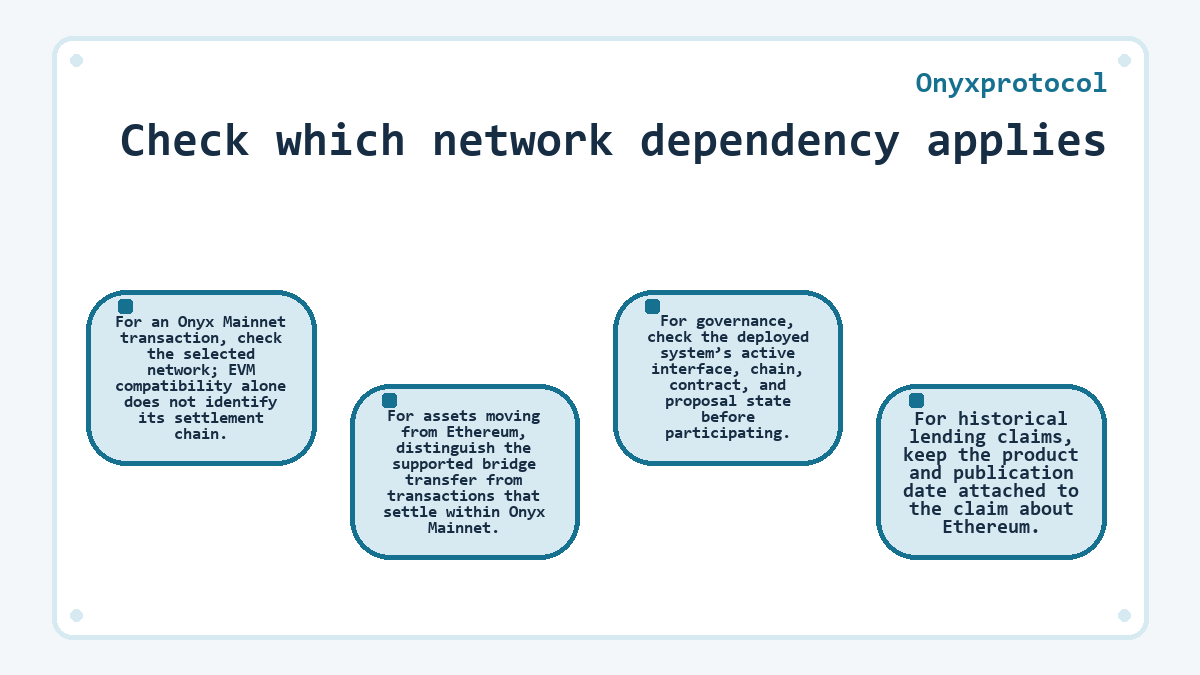
- For an Onyx Mainnet transaction, check the selected network; EVM compatibility alone does not identify its settlement chain.
- For assets moving from Ethereum, distinguish the supported bridge transfer from transactions that settle within Onyx Mainnet.
- For governance, check the deployed system’s active interface, chain, contract, and proposal state before participating.
- For historical lending claims, keep the product and publication date attached to the claim about Ethereum.